

We’re in the middle of a profound shift driven by AI. To understand what’s really changing—and what comes next—it helps to look backward.
The First Industrial Revolution wasn’t just about new machines. It was about new ways of organizing work. That same pattern is now playing out in software—and data is next.
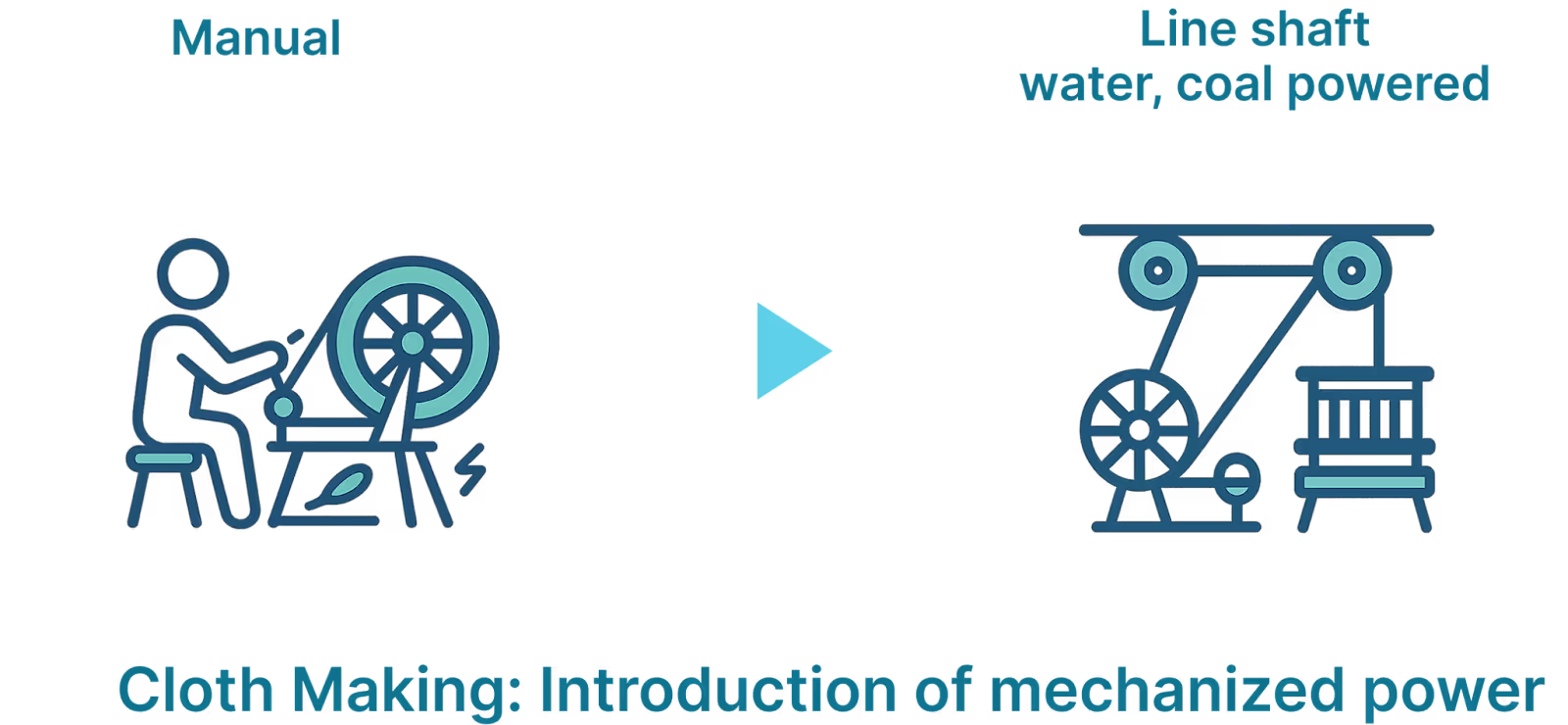
Cloth Making in the First Industrial Revolution
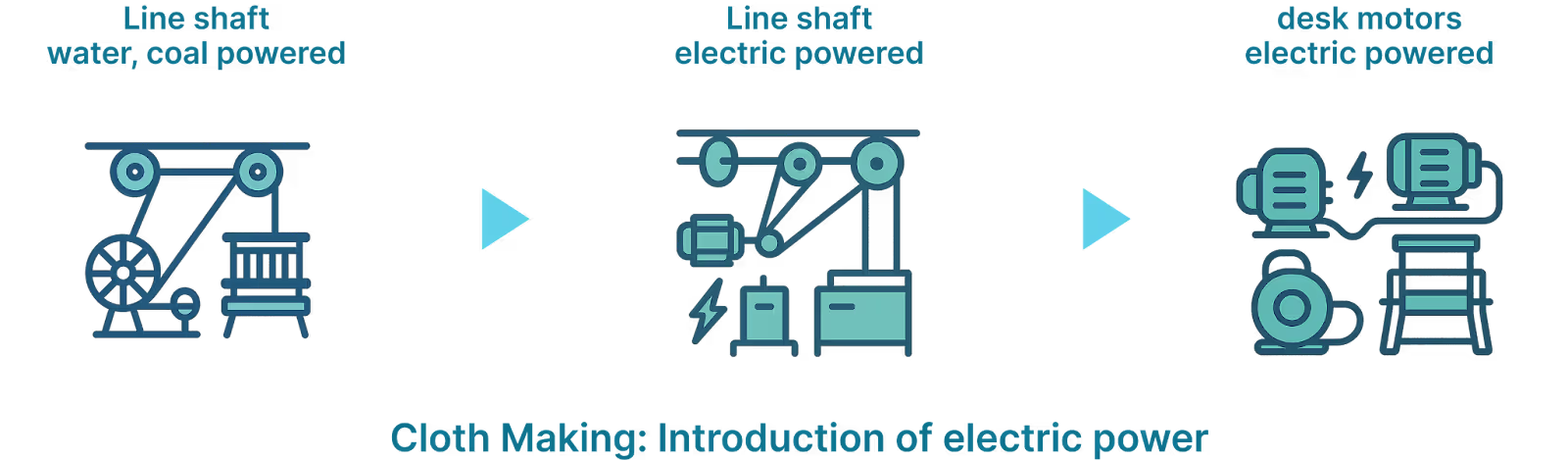
Around 1785, cloth production moved from human and animal labor to water and steam power. Mechanized looms delivered a step-change in productivity and radically lowered the cost of cloth. This is what the world looked like when electricity came.
The Move to Electricity
The move from steam to electricity has more lessons for us, since we’re not starting from scratch, but from existing tools. Electrification came in two distinct phases.
Phase 1: Electrifying the old model (circa 1900)
Factories replaced steam engines with electric motors—but kept the same line-shaft architecture. Electricity powered the existing system more efficiently, but the work itself stayed the same.
Phase 2: Re-imagining from first principles (1910s–1920s)
Manufacturers redesigned factories entirely. Individual electric motors replaced centralized shafts. Layouts changed. Workflows simplified. Productivity jumped again—not because electricity was stronger, but because the system was redesigned around it.
This second phase mattered more than the first.
Applying the lens to code
We’re seeing the same two phases play out in software development.
Phase 1: AI supercharges existing coders
Code agents like Claude Code and Cursor dramatically increase developer productivity. They help write boilerplate, refactor code, debug faster, and explore solutions.
This is electrifying the line shaft. The structure of software development remains the same, coders get help from AI but must understand the generated code, and modify it—but the process is now faster.
Phase 2: Software is re-imagined around outcomes
The second category is more disruptive.
Tools like Lovable and Replit rethink development for smaller applications and websites. Here, validation doesn’t happen by reading code—it happens by observing results.
Users describe intent. AI builds. Humans validate by behavior and output.
This unlocks software creation for an entirely new class of users
Projecting forward to data
Now comes data—and its impact may be even larger than code. Here’s why the data space is following a remarkably similar, yet even more critical, two-phase journey
Phase 1: AI accelerates existing data workflows
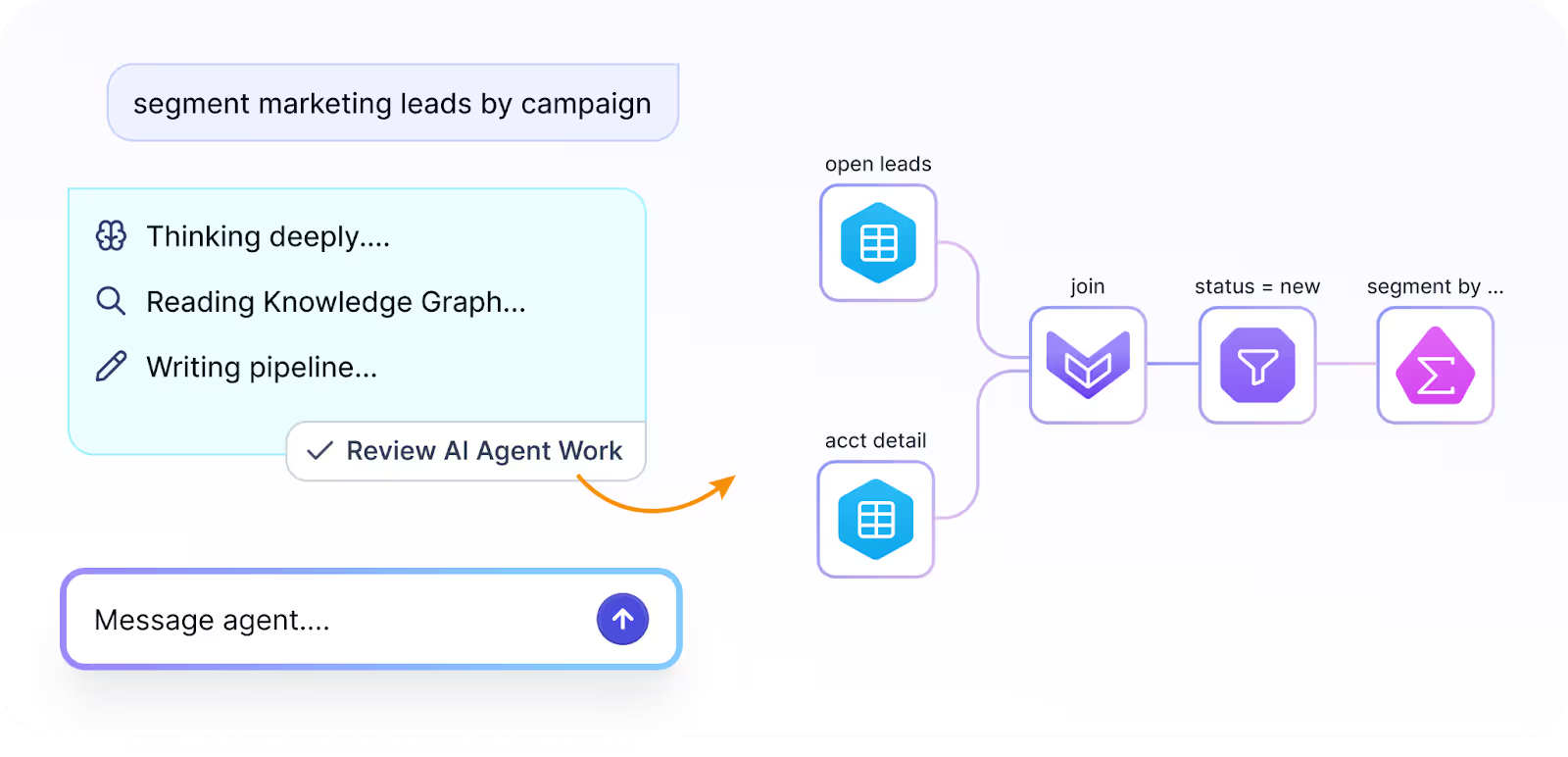
Today, many teams use desktop tools like Alteryx to manually build data workflows. AI can make this process more efficient, and this path is easy to understand and predict.
At Prophecy, we bring the power of code agents (Claude code) to the visual layer. Users describe their business problem, and AI agents generate the visual data workflows underneath. The human role shifts from building everything by hand to reviewing, validating, and refining.
This delivers immediate productivity gains
Phase 2: Data work is re-imagined
The deeper shift will play out over the next few years. We already see three major changes emerging.
Automated Tasks
Some data tasks can be fully automated—if the results can be validated programmatically.
These are closed-loop tasks where:
- No iterative user input is required
- AI can generate, run, validate, and fix workflows autonomously
- Users validate results through inspection, confidence scores, and explanations—not manual construction
Strong early examples include:
- Data onboarding into standard formats: Often many sources (often customers) send slightly different data that you want to process in a uniform way. You can define the common data format, and AI can generate transformation workflows, test outputs, detect errors, and iterate until they conform.
- Workflow documentation: In regulated environments, AI can generate complete documentation in one pass, with users reviewing and refining subjective elements.
This category will expand over time.
Merging Data Prep & Analysis
Data preparation and business intelligence have been separate categories forever. A traditional data prep product has some visualization capabilities, and similarly business intelligence products provide a little bit of data preparation.
AI changes this.
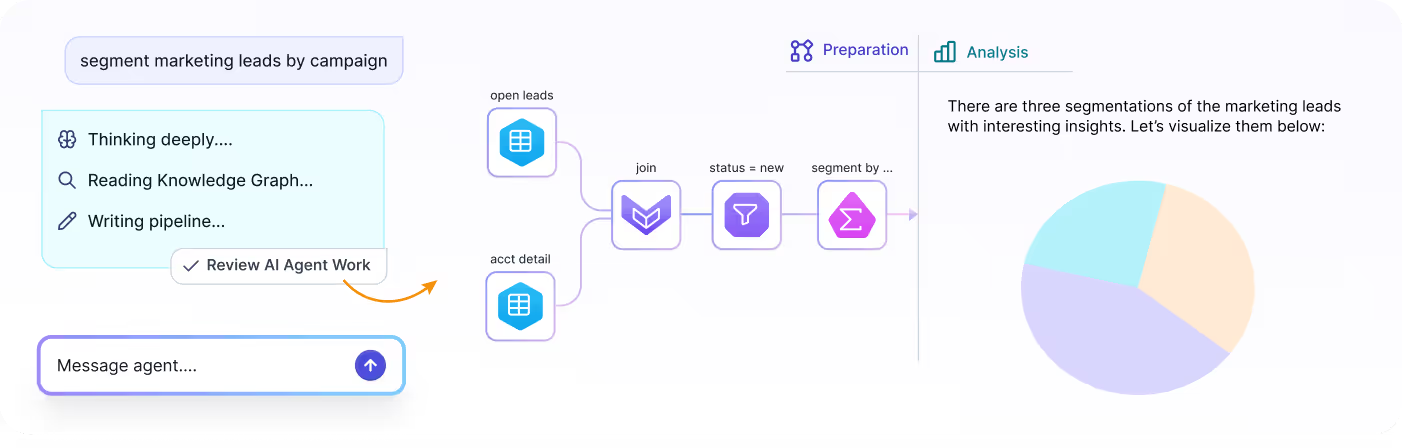
When you ask AI to answer business questions:
- Workflows must be built to combine, enrich, and aggregate data
- Visualizations are needed to understand patterns quickly
- Text and tables from AI help explain results and guide decisions
As AI makes users more effective across all three, data prep and analysis begin to merge into a single loop. Most work may happen here, with traditional BI tools serving as the final presentation layer—much like slides.
AI Guidance and Democratization
If you ask AI to look at your customer data and suggest segmentations, it will build the workflows to get insights, show you the visualizations, and recommend segmentations. For various segments, based on historic data it can predict conversion rates and help with capital allocation decisions.
So AI is doing two things
- Helping with data work: AI does a great job of generating workflows, visualizations and reports when embedded into Prophecy
- Helping with domain knowledge: AI also can help guide users on how to approach data tasks, guiding them toward completing their business goals
This expands who can work with data, how quickly decisions happen, and what kinds of questions become practical to ask.
AI Adoption Roadmap for Data Leaders
The two phase transition for data is not a distant future, it’s an immediate strategic choice. Data leaders must embrace a dual strategy to ensure they capture today’s efficiency gains while preparing for tomorrow’s fundamental re-architecture.
Here is a phased approach for navigating the AI-led transformation:
Accelerate Phase 1 Now
Focus on immediate productivity. Identify data workflows built on desktop tools or highly manual processes and move them with AI agents to automate the construction and iteration. This is about making your existing experts faster—delivering immediate ROI through automated documentation, visual workflow generation (like the capabilities from Prophecy), and testing while leveraging the scale of cloud
Identify Phase 2 Targets
Look for data tasks that are currently slow, high-volume, and have programmatically measurable outcomes. These "closed-loop" tasks, like standardizing customer data feeds, are the first candidates for full, autonomous agent-led workflows. Success here means the human role shifts entirely to validation and inspection.
Break Down Silos (The Merging Effect)
The AI-driven loop inherently combines data preparation, governance, and business analysis. Strategically, this means fostering tighter collaboration between your business teams, data analysts and data engineering/operations teams. The old handoff model will become obsolete as the AI agents converge these skill sets.
Measure Outcomes, Not Activity
The ultimate win of this revolution is speed of decision-making. Start aligning your team’s metrics to business outcomes, not just technical activity (e.g., number of workflows built/ deployed). This mindset shift prepares the organization to embrace the full democratization of data work that Phase 2 enables.
Summary
Every industrial revolution follows the same pattern:
- New power makes existing experts more productive
- Systems are redesigned around that power
- Entirely new classes of users emerge
AI has already taken software through this journey. Data is now entering its electricity moment.
Making today’s systems fast, and re-imagining workflows will both yield tremendous benefits, and enable enterprises to adopt solutions in a phased manner, with effective change management to not cause any disruptions,
This transformation has already begun, and we have exciting years ahead!